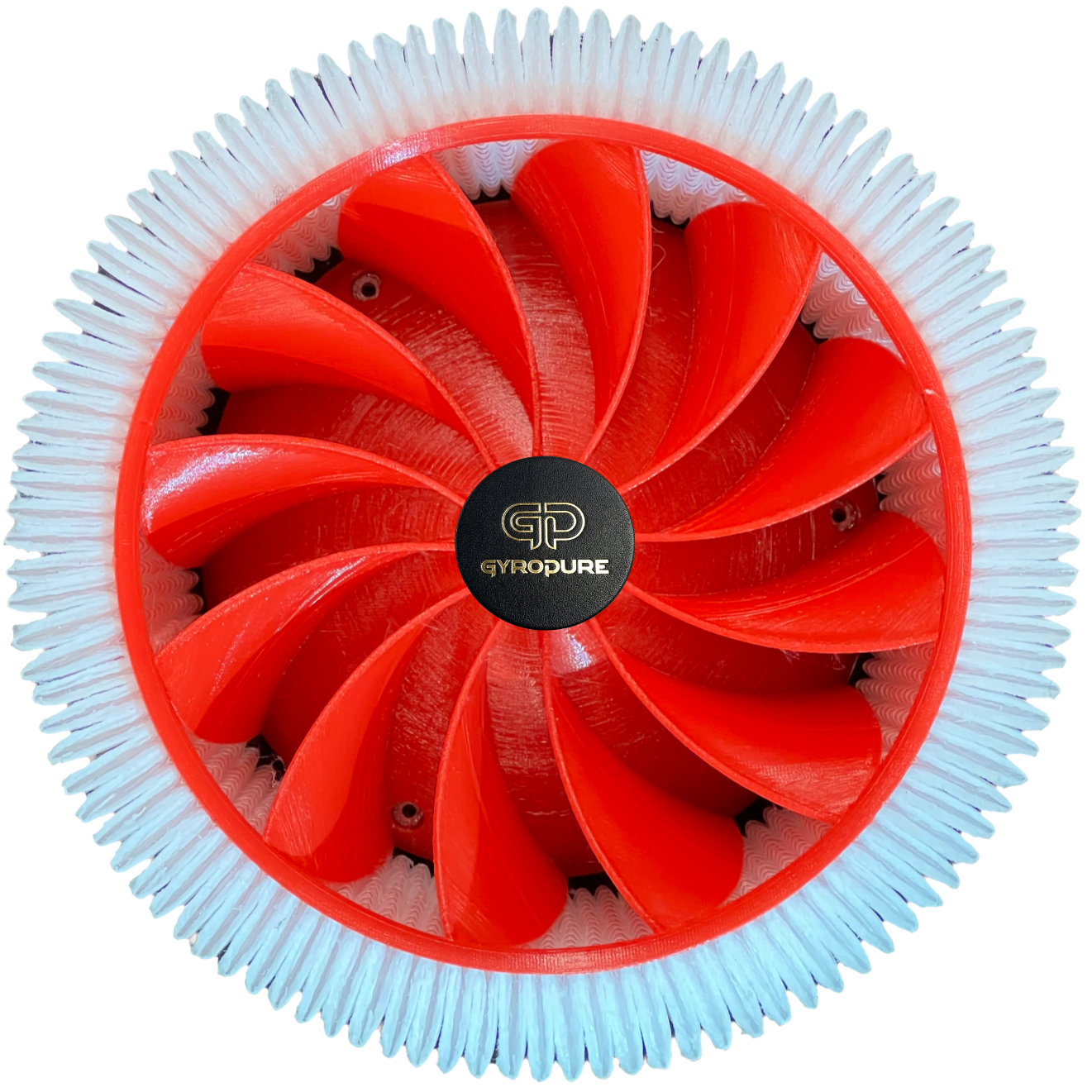
GYROPURE® Filterfan
Transforming air handling: Replacing filters and fans with superior power
Extreme efficiency: + 92 % conversion of Shaft power to usable air power (filter dp + suction + dynamic jet ).
Super compact: 60-80 % size reduction filter & fan.
High flow over wide range of sizes.
Ultra low noise: 26 dB@ 5,3 cm/s EPA 99,5% melt blown media.
General use - Compatible with most filter and fan applications.
World wide patented
Low energy, low noise
The compact GYROPURE filterfan offers maximum media area in an optimized shape that preserves ideal internal flow velocities and eliminates energy-wasting turbulence.
Media face velocity typically range from 0,5-2,5 m/s, inlet velocities from 3-10 m/s and exit velocities from 6-15 m/s. Hence also the ductwork occupy minimal space.
The large number of particles provides inherent self- balancing as the filter loads.
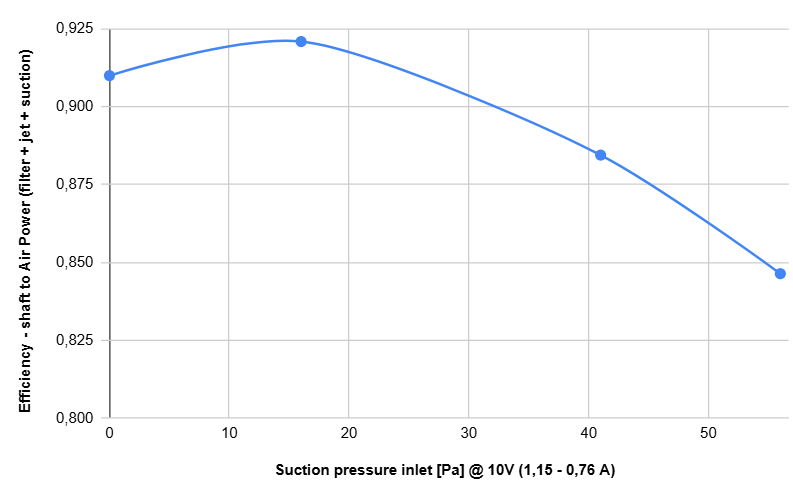
A key enabling component is the proprietary impeller, which semi laminar spreads high- velocity inlet air and contributes roughly 50% of the total pressure rise across the filterfan ensuring shaft to air power fan efficiencies close to 1. Over 92 has been demonstrated without careful tuning. The Efficiency curve on left side are based on controlled measurements at the SINTEF lab.
The maximum efficiency is approximately 63 % higher than the best obtainable at similar sized fans and will make a huge contribution to energy savings.
By keeping tangential velocities and Reynolds numbers low (typically < 9 m/s), noise is maintained below 30 dBA@1m. The low noise advantages apply also at higher velocities and even HEPA filtration.
Self sealing pleat packs can be placed in compartments for balance and easy filter change.
Long-life
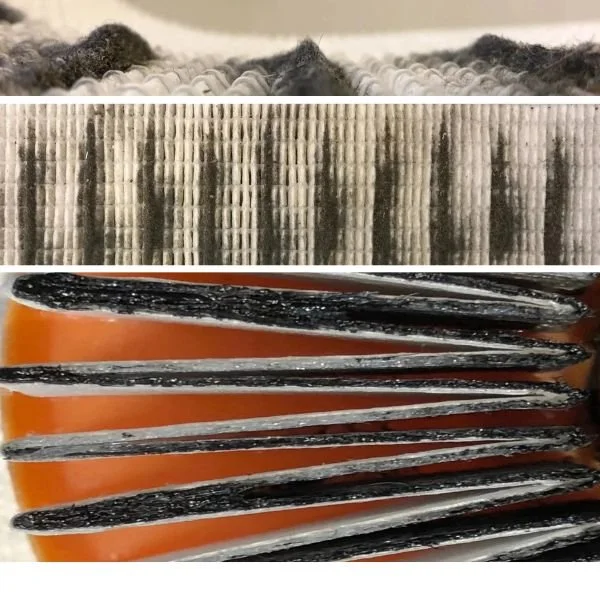
Coriolis separation is an inherent mechanism in the filterfan that keeps most of the pleat inlets open throughout the lifetime of the filter media.
On the coarse level, the impeller blades perform the primary separation by accumulating dust directly adjacent to the blades. Finer particles, such as pollen, are carried into the pleats closest to the impeller and gradually fill them — similar to how a vacuum cleaner bag fills.
In the final stage, even smaller particles (from approximately 4 µm and above) are separated within the pleats, leaving one side of the pleat essentially clean.
These effects significantly moderate the pressure increase across the filter over its lifetime in the case when sub micron particles is not the cause of clogging. Since a large portion of the filter fan’s total power consumption is related to the pressure drop across the media — while the aerodynamic conditions around the impeller remain relatively stable as the filter loads — thereby maintaining excellent fan efficiency over the filters service life.